
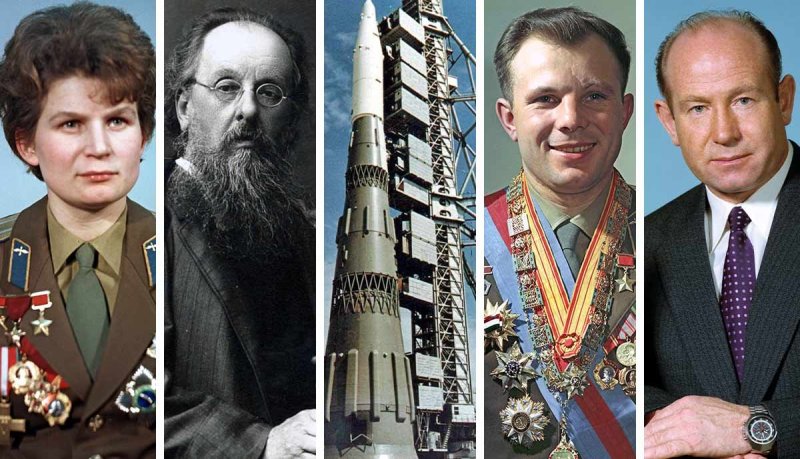
8 People Who Shaped the Soviet Space Program
Achieving many space firsts, the men and women of the Soviet space program accomplished incredible things .
The space program of the USSR achieved a number of historic milestones that redefined the boundaries of human space exploration—from launching the first satellite to sending the first man and woman into space .
These outstanding achievements were made possible by the work of a select few visionary individuals within the Soviet space program who contributed their skill, expertise, and bravery to the space race. People like Sergei Korolev, the genius of Soviet rocket engineering, and Yuri Gagarin, the first human in space, are just some of these brilliant individuals .
1 . Sergei Korolev : The Father of Soviet Rocket Engineering .
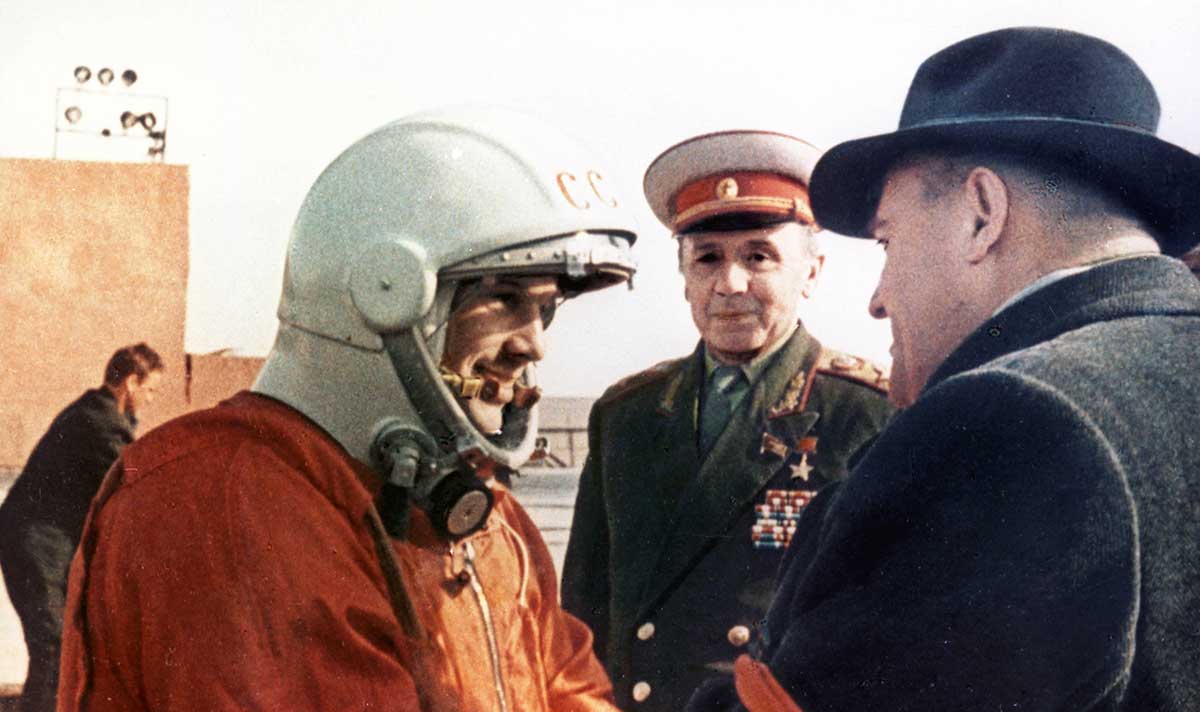
Sergei Korolev greets Yuri Gagarin before his historic flight, 1961. Source: Russian Ministry of Defence / Wikimedia Commons
Sergei Korolev is widely recognized as the father of the Soviet space program and was the chief designer of the rockets that the USSR used to explore the boundaries of space .
Despite the secrecy of Korolev’s work, his monumental achievements became widely known across the Soviet Union .
He nearly faced execution during Stalin’s great purge in the 1930s, but Korolev managed to escape death and endured a harsh prison sentence in a Siberian work camp .
After he was released, Korolev was recruited into the Soviet Union’s rocket development program, where his impressive engineering skills and forward-thinking gained the attention of his superiors.
Korolev was placed on the development team behind the R-7 rocket, a technological leap in rocket engineering that launched Sputnik, the world’s first artificial satellite, into orbit in 1957 .
The launch of Sputnik shocked the world, particularly the United States, as it made the Soviet Union the leader in the space race .
After his work on Sputnik, Korolev went on to manage the Vostok program, which launched Yuri Gagarin into space in 1961, further infuriating NASA, which lagged behind .
Korolev’s ingenuity and ambition had made the Soviet Union’s space program the envy of the world .
However, his career was cut short when he died in 1966 after a long period of ill health .
2. Mstislav Keldysh: Soviet Mathematician .
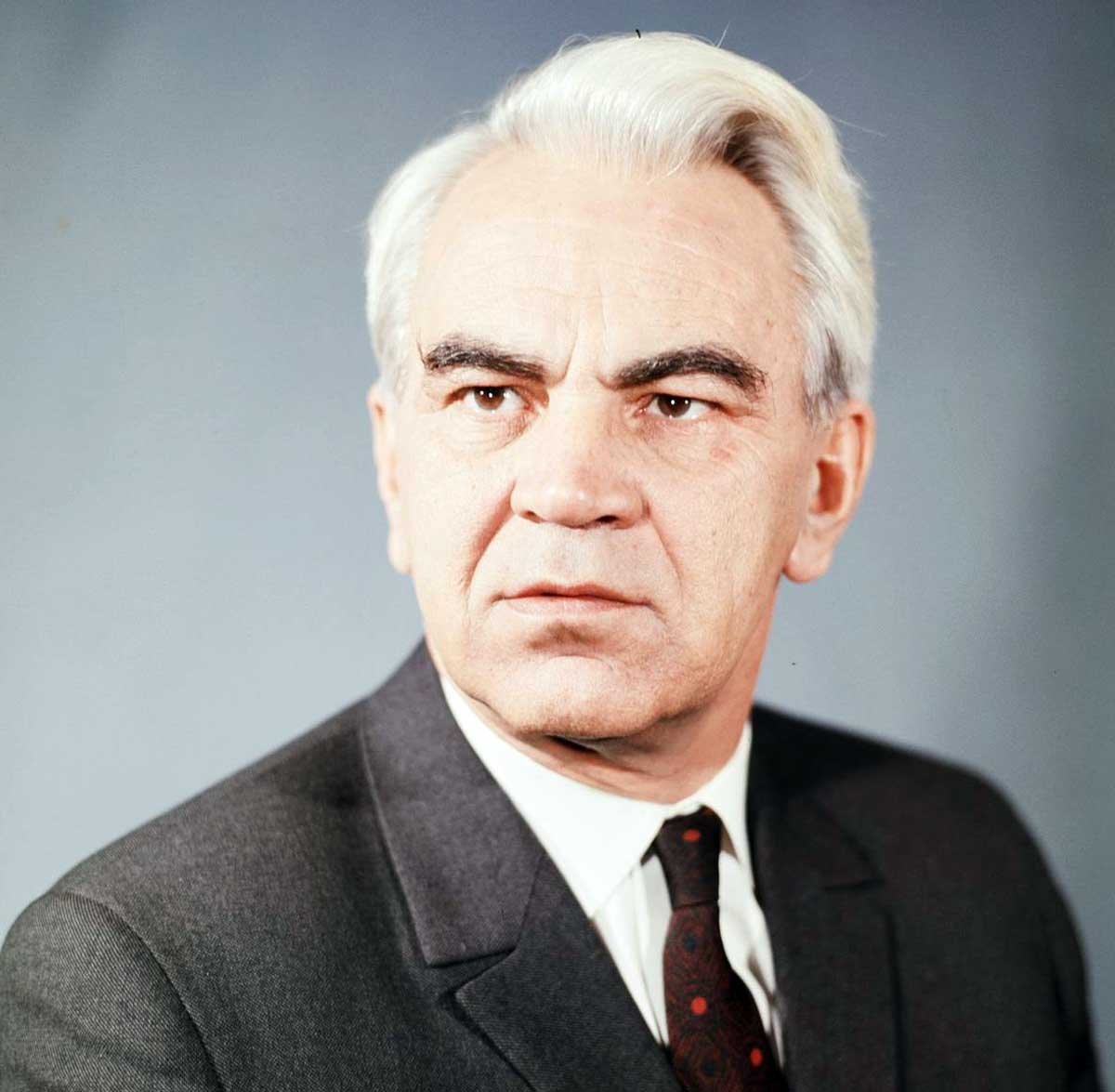
Mstislav Keldysh. Source: TASS
Mstislav Keldysh was a Soviet mathematician who laid the necessary theoretical groundwork for the development of Soviet rocket engines and was a guiding force within the Soviet space program .
Keldysh was pivotal in resolving the myriad mathematical challenges that were involved in space travel, such as trajectory calculations and rocket staging .
As a leading member of the Soviet Academy of Sciences, Keldysh worked closely with Sergei Korolev to develop the historic Sputnik satellite and the Vostok rocket program .
His mathematical calculations also supported the Soviet Moon exploration program, which achieved the first successful landing of an unmanned probe on the lunar surface, as well as the exploration of Venus.
The impact of his work extended far beyond the practical aspects of space travel .
As a leading figure within the Soviet scientific community, Keldysh fostered further collaboration within the USSR’s academic and engineering bodies .
This collaboration helped to funnel skilled individuals between the relatively isolated departments that made up the Soviet space program .
Moreover, his commitment to advancing the goals of Soviet science led him to be recognized as a hero of the Soviet Union.
3. Vasily Mishin: Rocket Genius

A mockup of the N1 rocket, 1967. Source: NPO / Wikimedia Commons
After Sergei Korolev’s untimely death, Vasily Mishin became the driving force behind the Soviet space program .
While under his leadership, the USSR continued to make great strides in the field of space exploration, but NASA slowly began to close the gap during his tenure .
The work Mishin carried out primarily focused on the development of the ambitious N1 rocket, which the Kremlin hoped would put Soviet cosmonauts on the Moon .
Mishin spearheaded the development of this complex rocket launch system, but the N1 was plagued with repeated failures and was eventually beaten to the lunar surface by the Saturn V rocket .
The Soviet space program’s leadership under Mishin produced both positive and negative results for the USSR. On one hand, Mishin helped to maintain the space program throughout the turbulent decades of the 1970s and 80s .
His leadership also led to the hugely successful Mir space station and Salyut program. However, the Soviet space program never quite caught up with NASA, and several expensive projects failed under his leadership.
4. Konstantin Tsiolkovsky: The Father of Astronautics
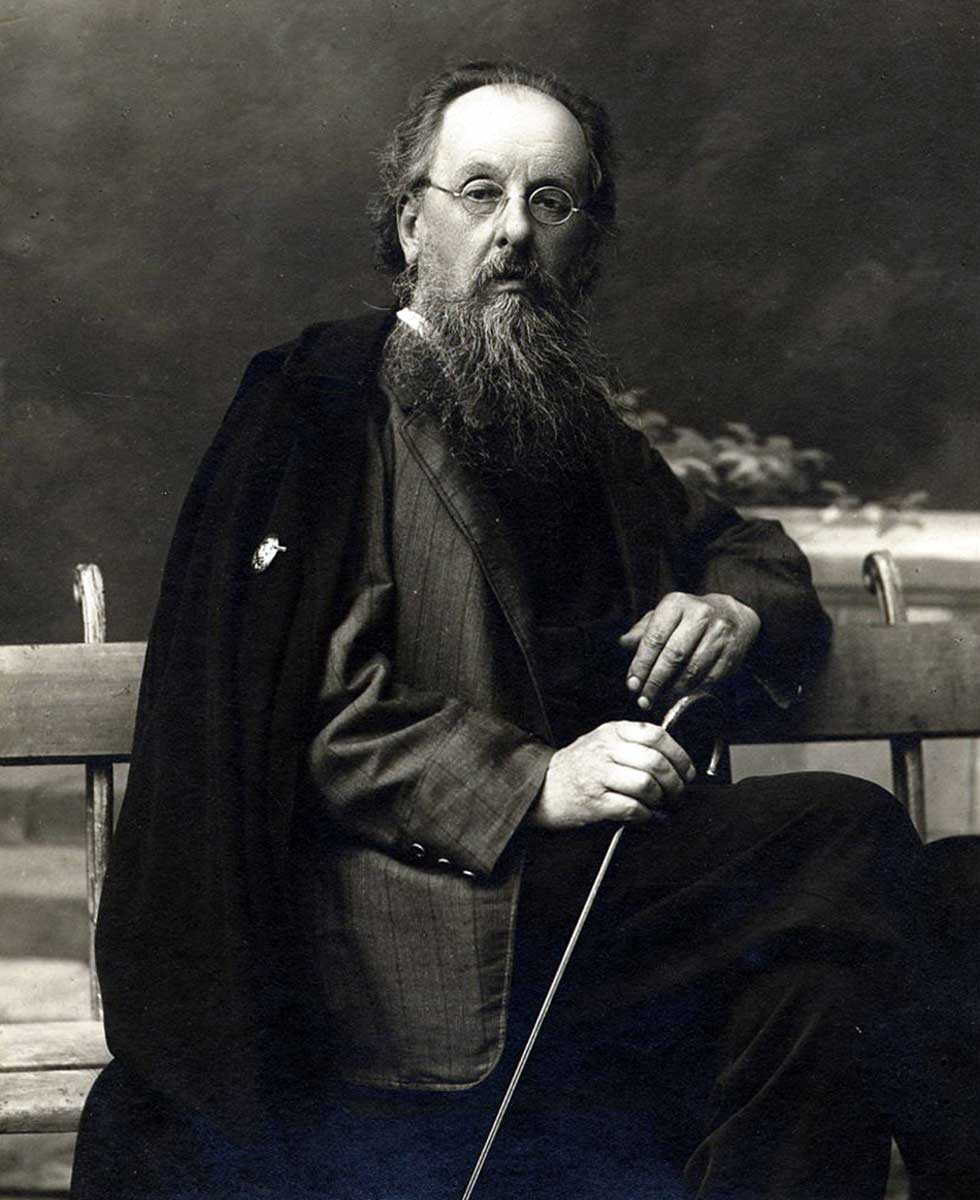
Konstantin Tsiolkovsky, 1924. Source: Wikimedia Commons
Konstantin Tsiolkovsky is widely celebrated as one of the pioneers of modern astronautics and a key player in the field of Soviet rocket engineering .
He was a largely self-taught scientist who formulated the fundamental rocket equation that dictates the mass of a launch vehicle, the velocity of the exhaust, and the speed it can achieve .
Tsiolkovsky’s groundbreaking theoretical work enabled Soviet engineers like Sergei Korolev to envision the realities of space travel long before it became a practical possibility .
Moreover, his writings during the early half of the 20th century inspired a generation of Soviet scientists and engineers, including Korolev .
As a result of his early theoretical work, Tsiolkovsky became known as the father of astronautics, and his legacy is celebrated throughout the former Soviet Union.
5. Boris Chertok: A Legendary Engineer
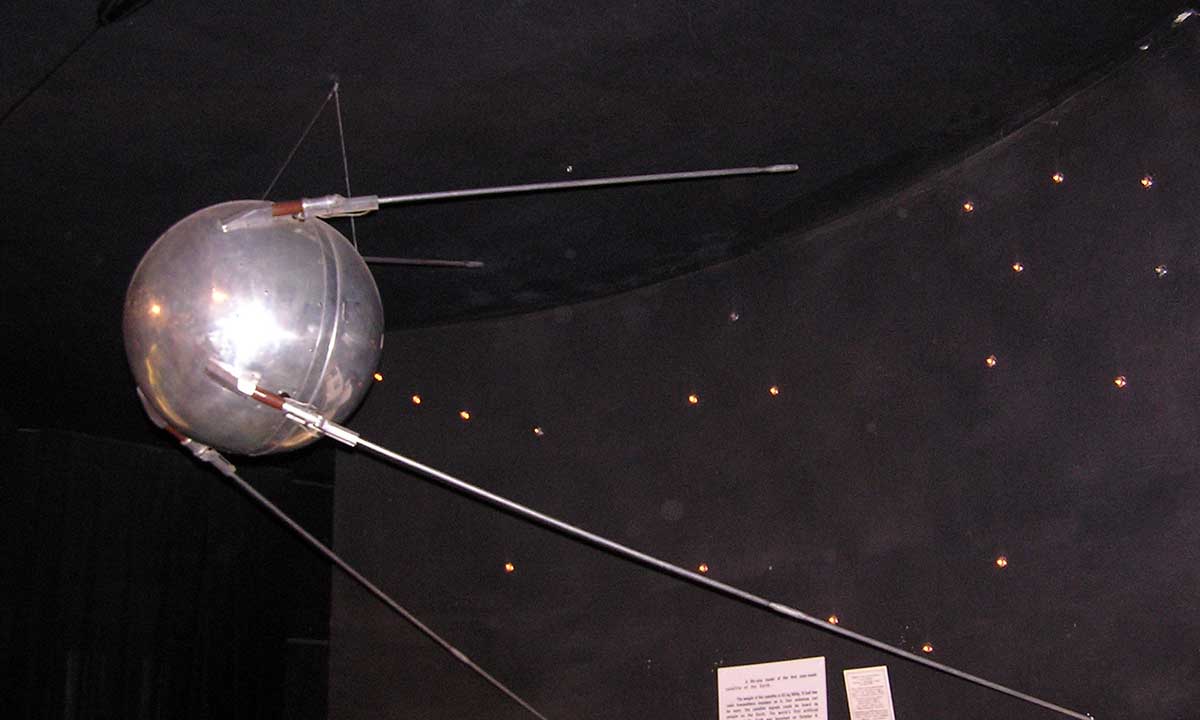
A model of the Sputnik 1 satellite, 2008. Source: Andrew Butko / Wikimedia Commons
Boris Chertok was a prominent engineer within the Soviet space program who was responsible for the control systems that Soviet spacecraft used to execute complex maneuvers in Earth’s orbit .
He worked alongside Korolev in the early years of the Soviet space program to realize the ground-breaking Sputnik and Vostok missions .
His expertise and guidance were crucial to these early victories in the space race .
After the fall of the Soviet Union, Chertok went on to publish an extensive historical account of the Soviet space program .
His four-volume work titled Rockets and People covered every aspect of how the USSR achieved the early success of Sputnik and Vostok and why it failed to reach the Moon.
6. Yuri Gagarin: The First Man In Space
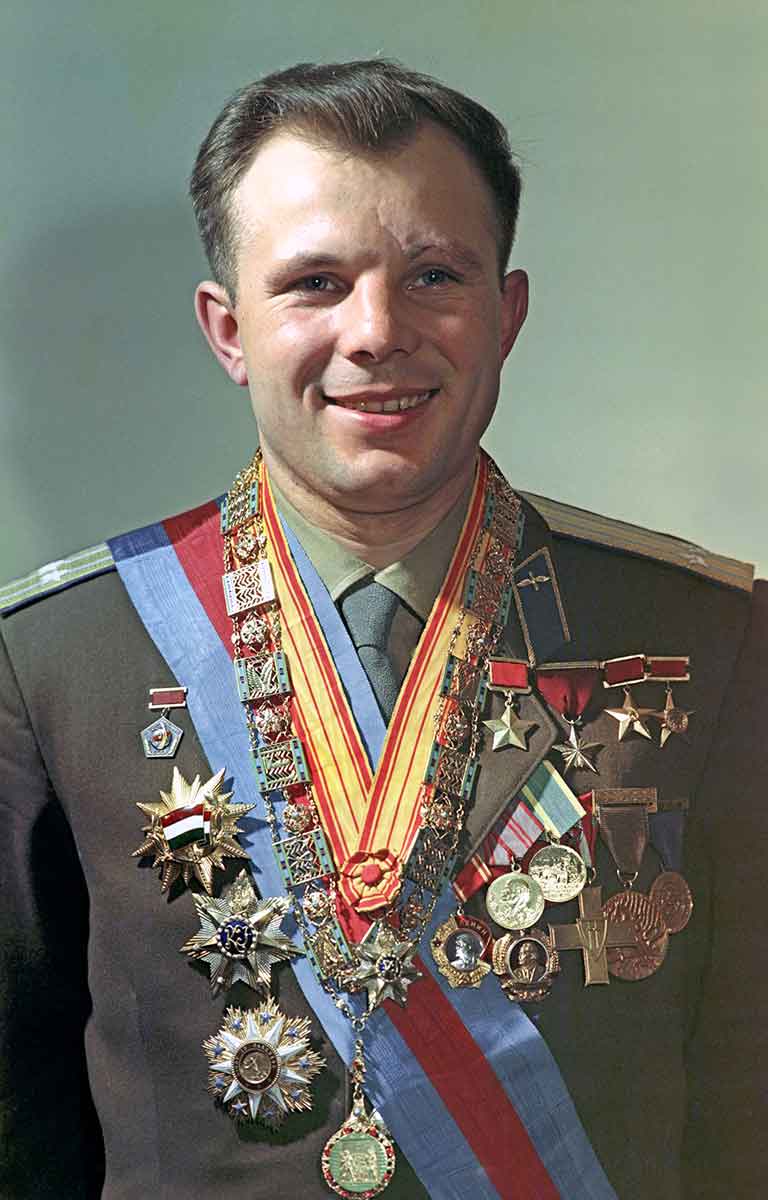
Yuri Gagarin, 1963. Source: Soviet Ministry of Defense / Wikimedia Commons
On April 12, 1961, sitting aboard the Vostok 1 space capsule, Yuri Gagarin became the first human to travel into space .
From humble beginnings, his parents were both workers on a collective farm .
He went on to study engineering while completing his pilot training in 1957. After graduating, Gagarin began training in the Soviet space program and was chosen as a candidate for the historic Vostok 1 mission.
The first manned space flight in history lasted approximately one hour and thirty minutes, in which time the Vostok 1 capsule orbited Earth at an altitude of three hundred kilometers ( 186 miles ) .
Gagarin returned to Earth a hero after his successful mission, earning him countless honors including the Order of Lenin and being named a Hero of the Soviet Union .
Statues were built to celebrate the historic flight, and streets across the USSR were renamed in Gagarin’s honor .
This Soviet space achievement was a significant blow to NASA, which ramped up its own plans to put an American astronaut in space. Tragically, his life was cut short when he died in a plane crash just seven years after his historic space flight .
7. Valentina Tereshkova: The First Woman in Space
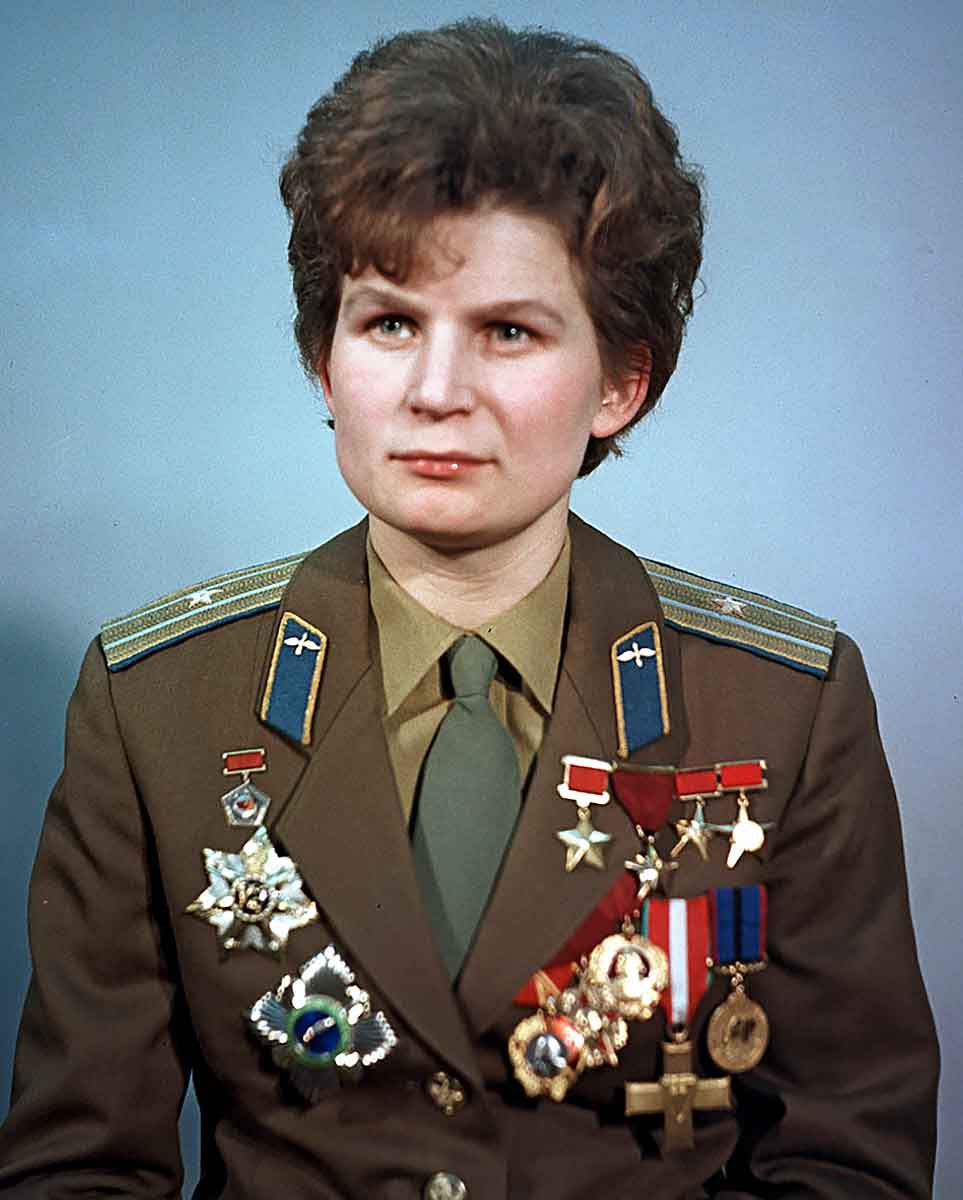
Valentina Tereshkova, 1969. Source: RIA Novosti / Wikimedia Commons
Valentina Tereshkova made history when she was chosen to be the first woman to travel into space. On June 16, 1963, aboard Vostok 6, she successfully entered Earth’s orbit and circled the globe for seventy-one hours .
Despite the fact that she was not actually a trained pilot, Tereshkova’s former training as a skydiver gave her the edge over other candidates and qualified her to begin training in the Soviet cosmonaut program.
During her time in orbit, the Vostok 6 capsule briefly rendezvoused with the Vostok 5 spacecraft piloted by Valery Bykovsky, a significant milestone in space exploration as it was the first time two manned missions were in space at the same time .
Upon returning to Earth, Tereshkova was awarded the title of Hero of the Soviet Union and the Order of Lenin .
After she retired from the Soviet space program, Tereshkova pursued a career in politics and became an elected member of the Russian parliament .
Outside of politics, Tereshkova has used her public profile to champion the role of women in science and engineering fields globally .
8. Alexei Leonov: The First Person to Conduct a Spacewalk

Alexei Leonov, 1974. Source: NASA / Wikimedia Commons
Alexei Leonov is a legendary figure in the history of Soviet space exploration .
He was the first human to conduct a spacewalk, which refers to extravehicular activity outside a spacecraft .
On March 18, 1965, the Voskhod 2 spacecraft carried two cosmonauts, Pavel Belyayev and Alexei Leonov, into orbit .
While above the Earth, Leonov carried out the first spacewalk, lasting just over 12 minutes, completing a major milestone in space exploration .
However, Leonov’s mission almost ended in tragedy, as his spacesuit had expanded considerably in the vacuum of space, making it almost impossible for him to return to the Voskhod 2 capsule. After some time, he managed to enter the craft .
The crisis was averted, and history was made .
Later, due to a significant malfunction, the Voskhod 2 capsule landed hundreds of miles off course in the dense Siberian forest .
The two cosmonauts were forced to wait overnight for rescue during the freezing winter .
The incident prompted the invention of a cosmonaut survival pistol that would help fend off aggressive wildlife in the event of another landing in the wilderness .
Leonov went on to participate in the Apollo-Soyuz program in 1975, a collaboration between the USSR and NASA that saw an American and Soviet spacecraft dock together in space .
https://www.thecollector.com/people-who-shaped-soviet-space-program/ .
- 15 خرداد 1405
- 0 دیدگاه
- 10 بازدید
 53 - تصاویری جالب از لحظه وقوع طوفان در منهتن